No dead heroes (1986)
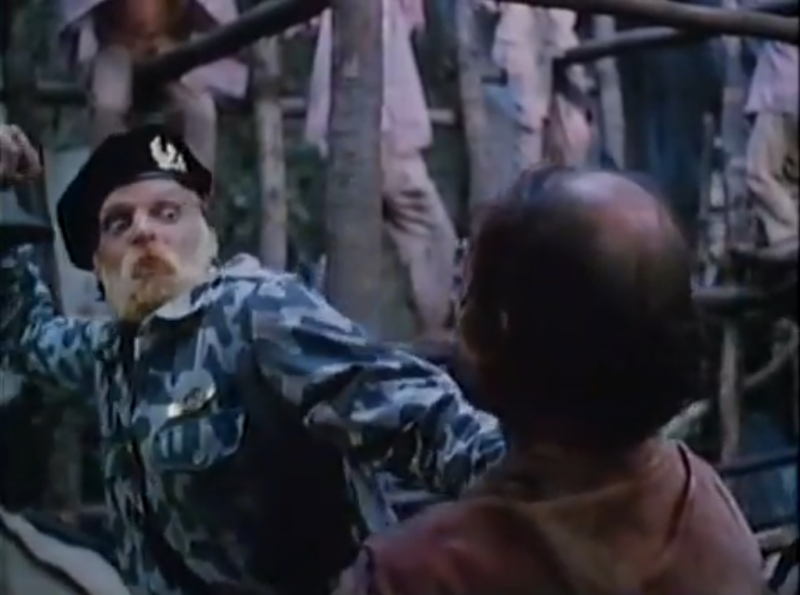
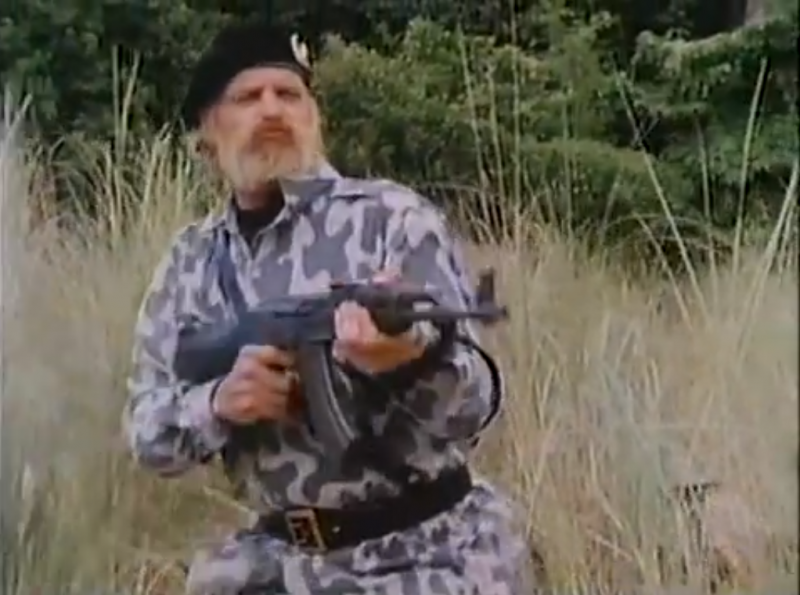
В самом сердце вьетнамских джунглей расположен концентрационный лагерь для пленных джи-ай. Заправляет там всем советский генерал Иван Диманович (явно выходец из БССР), садист, убийца, животное да еще и коммунист. К тому же он бородат.
Вот этот негодяй, занят обычным делом:
собственноручно избивает американских солдат. Один из храбрецов плюёт в Димановича. Тогда злонамеренный мерзавец Диманович с криком "Ноубади кен колл ми чикен!" "Никто не смеет плевать мне в лицо!" достает пистолет и собственноручно расстреливает несломленного янки!
Генерал Диманович вообще всё делает собственноручно. Настоящий зверюга, говорю я вам!
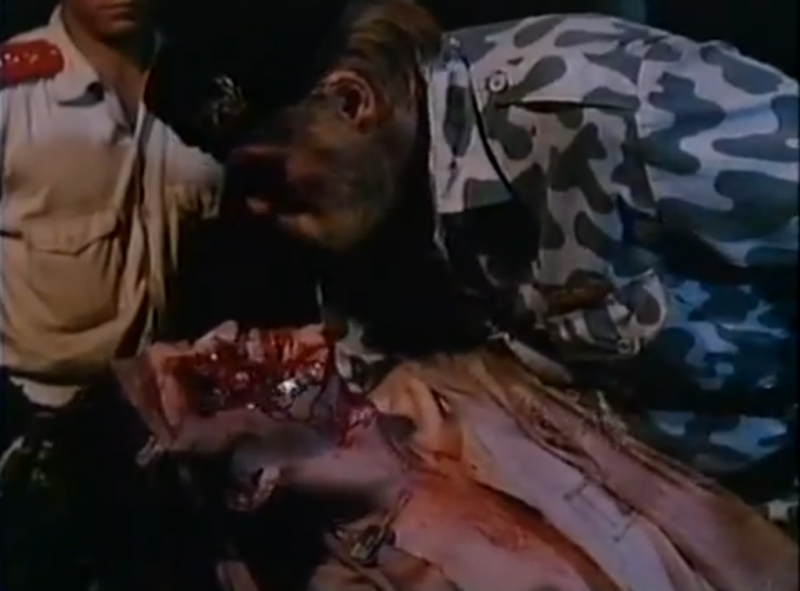
А подать сюда ещё пленного, говорит он. И ну прижигать пленных сигарой, вырывать им ногти, бить по голове, а потом расстреливать, расстреливать, растреливать!!!
"Я тебе все лицо обглодаю" в представлении
генерала Димановича не просто красивые слова.
Как любой коммунист, генерал очень любит произносить пламенные речи с трибуны:
Суть, как говорится, такова. Генерал не разменивается по мелочам. Он задумал, ни много, ни мало, УБИТЬ ПРЕЗИДЕНТА СОЕДИНЁННЫХ ШТАТОВ! Для этой цели одного из пленных американцев доставляют в секретный советский госпиталь. Там ему в тыкву вживляют некий чип! С его помощью американцем можно управлять (ну, типа "Я должен убить Френка Дребина", вы поняли).
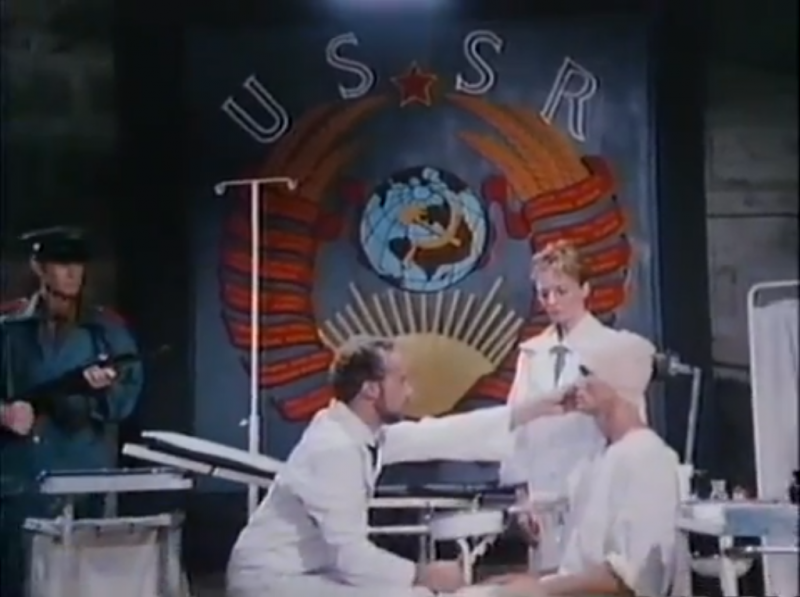
Вот интерьер секретного совесткого госпиталя:
"СССР" написано по-английски, у врачей на халатах шильдики "эмердженси", всё, как полагается. Впрочем, и все русские говорят в фильме по-английски и изредка по-вьетнамски.
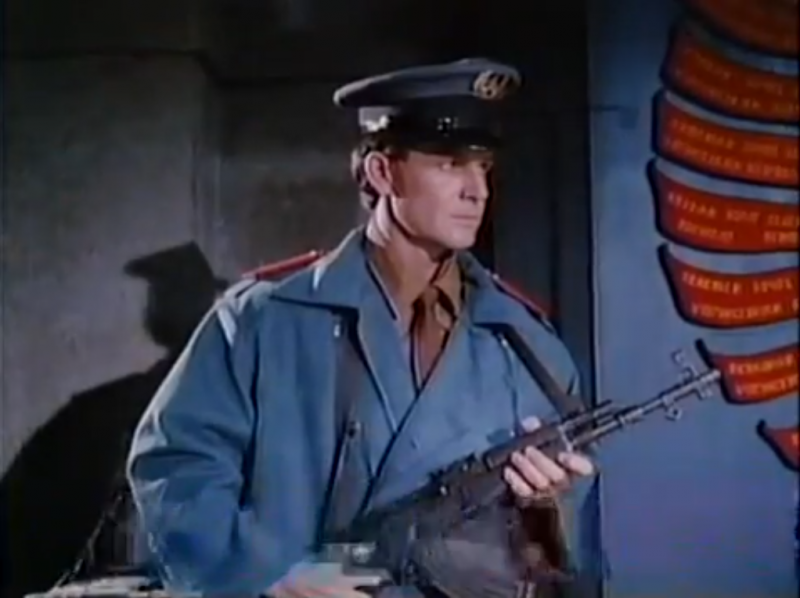
Герб охранает avtomatchik. Его форма впечатляет не меньше нечеловеческих экспериментов советских врачей.
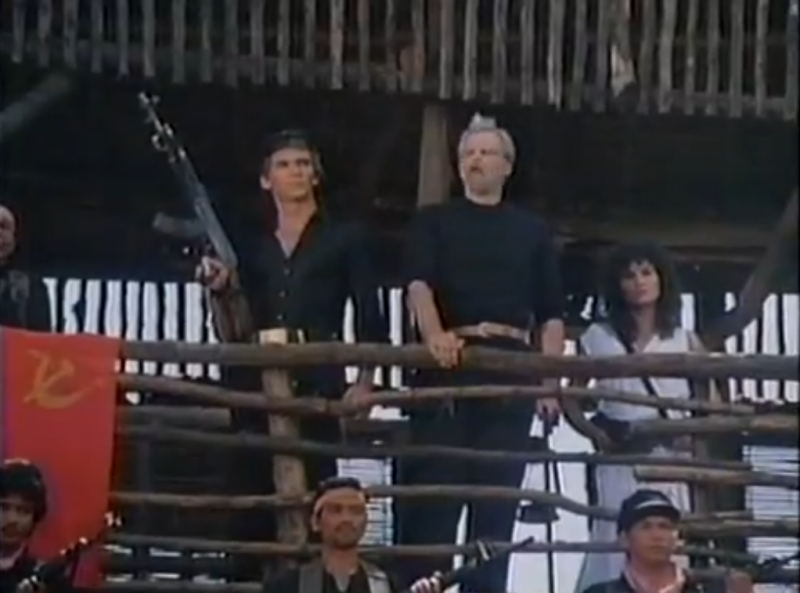
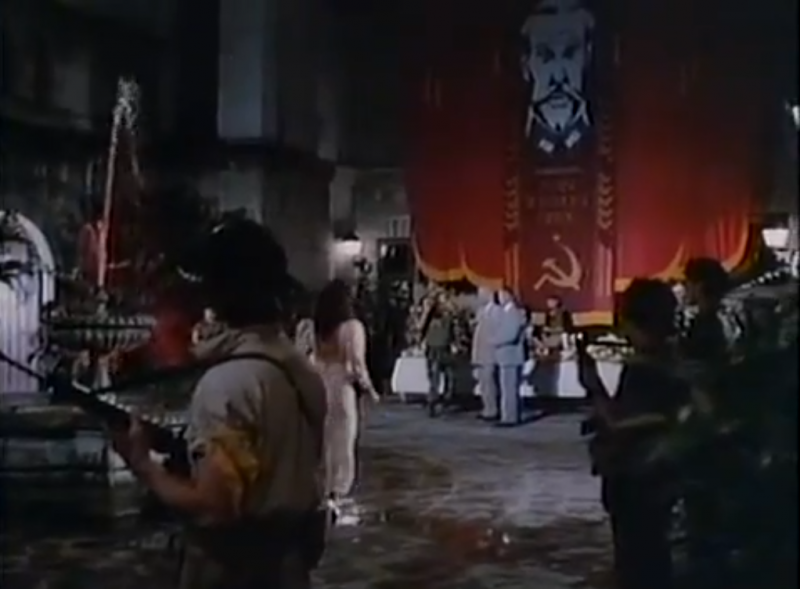
После череды самых нелепых и нелогичных сцен, которые только можно себе вообразить, действие фильма переносится в Сальвадор, где бессердечный Диманович с помощью запрограммированного американца устраивает кровавую бойню в церкви. В честь этого события сальвадорские эль комманданте и наши дают совместный банкет. Над серпом и молотом изображен почему-то Александр II. Судя по выражению его лица, он и сам немало удивлен.
ru_klukva_ru: No dead heroes


Просто першинги перебили всё и вся. Ибо "новый виток гонки вооружений", не хрен собачий. Что касается русофобской Европы (тм), то это ещё как посмотреть. Потому, как та же Франция в период холодной войны извивалась как уж на сковородке. В общем, была абсолютно непредсказуема. Армия Великобритании, в основном, была озабочена своим островом. На континенте не было никакой реальной тактической силы кроме Бундесвера. Против него и готовились воевать. Главное - надо было обеспечить невовлечённость США в новую войну в Европе. На это и работала пропаганда. Всякие ранообразные движения за мир, разные сорта "yankee go home", и т.д. Типа, это вообще США создаёт напряжённость в Европе, без США было бы всё зашибись. Чтобы офицеры США это чувствовали и не особенно хотели воевать за Европу. Ну, вот, навскидку:Originally Posted by BappaBa

"Мы спросили его, что он думает о Западной Германии, о Берлине. Он ответил:
- Я мог бы говорить об этом с вами целую неделю: не так часто приходится встречаться с американцами! - Он сказал это дружественно, но инстинктивно мы снова почувствовали в его тоне недоброжелательство, с которым встречают американцев в нынешней Европе, - цена, которую мы платим за неразумную политику наших лидеров.
- Конечно, продолжал он, - было бы хорошо чтобы наша страна была объединена опять. Но как и с чем объединяться - вот в чём вопрос. Мы никогда никому не отдадим наши завоевания. (Croc: sic! Рамиль, хорошо помнишь, что у нас называлось "завоеваниями"?) А вы, американцы, признайте нас, заключите договор с нами и оставьте нас в покое... Мы сами сможем договориться с немцами на Западе, но пусть сначала уйдут поджигатели войны." Ogoniok - Google Books
Борьба за мир велась, для того, чтобы имевшие принципиальное превосходство США не напали на СССР.Главное - надо было обеспечить невовлечённость США в новую войну в Европе. На это и работала пропаганда. Всякие ранообразные движения за мир, разные сорта "yankee go home", и т.д. Типа, это вообще США создаёт напряжённость в Европе, без США было бы всё зашибись. Чтобы офицеры США это чувствовали и не особенно хотели воевать за Европу
Иначе бы не считались успехом сов. дипломатии Хельсинкские соглашения. Америка была инициатором раздела Германии и главным препятствием для ее объединения на нейтральной основе, по австрийскому сценарию. При этом очень долго не признавали ГДР, при том что СССР признал ФРГ еще в 1954 г.

Вот потому, что вы говорите то, что не думаете, и думаете то, что не думаете, вот в клетках и сидите. И вообще, весь этот горький катаклизм, который я здесь наблюдаю, и Владимир Николаевич тоже…

Fixed that for you!
"Individualism" is a complex topic and I would agree that it's not inherently "abhorrent and dangerous" to challenge it or to argue that "individualism" must be balanced by socially-oriented, "communitarian" values. But history suggests to me that broad attacks on personal freedom or private-property rights have generally had abhorrent and dangerous consequences....and marks 'abhorrent and dangerous' anything that disagrees with that).
This statement makes literally no sense to me -- really, America unilaterally chose to divide the German pie?Америка была инициатором раздела Германии и главным препятствием для ее объединения на нейтральной основе
As we say in English, it "takes two to tango."
You can say "universal values" or "universally valuable" - both are correct.
"Individualism" is a complex topic and I would agree that it's not inherently "abhorrent and dangerous" to challenge it or to argue that "individualism" must be balanced by socially-oriented, "communitarian" values. But history suggests to me that broad attacks on personal freedom or private-property rights have generally had abhorrent and dangerous consequences.
The problem is when PROPERTY is valued more than PEOPLE.
Вот потому, что вы говорите то, что не думаете, и думаете то, что не думаете, вот в клетках и сидите. И вообще, весь этот горький катаклизм, который я здесь наблюдаю, и Владимир Николаевич тоже…
Does Bond count? It's difficult deciding which Bond Vs The Russians is the best!
The Bond films are British productions, of course, and thus may need to be considered in a separate category from "Hollywood stereotypes of Russians."
But "From Russia with Love" definitely provides an instructive contrast between:
1) the "good-hearted Russian" Tatiana Romanova who naturally wishes to defect (and also happens to be extremely sexy), and
2) the "evil совок" Rosa Klebb (who is not only a fanatical Commie, but also happens to be old, ugly, and -- by the way! -- an implied lesbian).
Интересно, а в чём заключалось принципиальное превосходство США?
Но главный вопрос даже не в этом. Почему ты считаешь, что если какое-то мирное соглашение заключено, то это является гарантией мира? Если две страны хотят жить мирно, им не нужны никакие мирные соглашения, вполне достаточно торговых. (В идеале, военных.) Вот, безо всякой пропаганды, просто подумай сам. Какова суть любых мирных соглашений? Обе стороны соглашаются о взаимном ненападении если только одна сторона не посчитает, что вторая сторона собирается напасть, провоцирует первую сторону к нападению, или грубо нарушает национальные интересы в какой-либо области, что само по себе является достаточным поводом для войны. Ведь это же, по сути, фиговый листок! Его ещё иногда называют "рамочные соглашения". Типа, повесь в рамку, на большее не годится. Войны между СССР и США никак не могло произойти, как минимум, по тому, что был ядерный партитет, красиво называемый "концепцией ядерного сдерживания". Так что, никакие планы войны между СССР и США не могли получить ход ни при каких условиях. Ни при договоре ни без него. Однако, армия СССР была самой мощной в мире по любым стандартам. Вот, ты мне ответь на простой вопрос - зачем? Чтобы обеспечить себя от нападения достаточно ядерного паритета. Смысл нападать теряется по-любому. Правильно? Но, за одним маленьким исключением. Армии должно быть достаточно для обеспечения ВОЗМОЖНОСТИ ЗАПУСКА ядерного оружия. А вот нападающая сторона должна обеспечить себе ПОДАВЛЯЮЩИЙ ПЕРЕВЕС, чтобы завалить противника с такой скоростью и с такой тактикой, чтобы он не УСПЕЛ воспользоваться своим ЯО. Самой действенной тактикой против ЯО в те времена считалось внезапное и повсеместное использование больших количеств мобильных войск. Недаром в СССР их было столько и так вооружённых, что их выделили в отдельный род войск - ВДВ. За то отдельное спасибо энтузиасту сего дела товарищу Маргелову. Короче говоря, у Европы не было ни одного шанса. Стопудово. Весь вопрос был лишь в вовлечённости США в дела Европы. Встрянет или не встрянет? Скорее всего, если сильно озадачить, то не встрянет. Вот подумай сам: допустим в США резко меняются руководители на всех ключевых постах. Как быстро они смогут принять решение о начале боевых действий против СССР? День-два, не меньше. Теперь добавь потенциальные многотысячные антивоенные демонстрации под лозунгом "Мы ещё хотим пожить" слева и под лозунгом "Да пошли они там в своей Европе нафиг, пусть сами разбираются" справа и ты получишь правильный ответ. Чтобы окончательно прояснить миролюбивое отношении СССР к США во время начала подготовки СССР к войне при Андропове дали ход пиар-проекту под кодовым названием "Саманта Смит".
They're both grammatical, but the emphases are different. "Universal values" implies (to me) that everyone everywhere accepts these values; "universally valuable" implies (to me) that the values have some inherent positive worth, and that everyone everywhere OUGHT to accept them. In other words, North Korean ideology does not accept private property as something good, but the libertarian assumption is that the North Koreans would be vastly better off if their society DID recognize private-property rights, at least to some degree.
That's a fair point. But (except among radical libertarians), saying that private-property rights ought to be regulated and restricted to some degree by the government is different from claiming that private-property as a concept has no inherent positive value for human well-being. (The radicals claim that restricting private-property rights to ANY degree is tantamount to denying them -- thus the cliche "Taxation is theft".) On the other hand, it's a general assumption of libertarians (not just the radicals) that such rights as freedom of religion, speech, and the press can all be logically derived from and protected by an underlying respect for private property.The problem is when PROPERTY is valued more than PEOPLE.
Далеко не сразу.по тому, что был ядерный партитет,
Да. Они отказались от совместного управления, слили три зоны в Тризонию, ввели свою марку, провели сепаратные выборы, провозгласили ФРГ, восстановили ФРГшную армию, приняли ФРГ в НАТО. Все аналогичные действия СССР были ответными шагами. Советский Союз возмущался действиями западных властей и выступал за создание единой, нейтральной Германии в новых границах.America unilaterally chose to divide the German pie?
The problem we make in the West I think, is that we assume CAPITALISM is flawless, and we think of it as a political system. There is something wrong when a minority of about 400 people control 99% of the wealth. There is a problem when it takes thousands of Americans giving what little they can, to support a political candidate - and they still cannot match the petty change a dozen corporations can throw in to influence the race.
Property is supposed to be used, and people are supposed to be loved. But instead, people are used and property is loved.
Вот потому, что вы говорите то, что не думаете, и думаете то, что не думаете, вот в клетках и сидите. И вообще, весь этот горький катаклизм, который я здесь наблюдаю, и Владимир Николаевич тоже…
К началу 70-х уже был достигнут. Ядерный паритет — Википедия
Тебе, по существу, есть что возразить? По общей концепции, которую я излагаю? Ведь, кроме отдельного рода войск ВДВ у нас ещё было дофига и больше всякой мелочёвки, типа десантно-штурмовых воск и спецназа...
Я знаю, когда он был достигнут, но основная борьба за мир была именно в первые послевоенные десять - может, 20 лет.
Потом, с идеологической точки зрения, это была выгодная тема.
Если бы Америка выпала из жизни, Советский Союз стал бы хозяином Европы и без войны, как стала им Америка после крушения СССР. Это относится не только к Европе, так как СССР превосходил в военном отношении любую страну, кроме США.
Well, I'd say that the annexation of the Baltic Republics (paging Nulle!) was an аналогичный шаг, but certainly not an ответный one, as it had occurred several years prior to the division of post-war Germany -- and, arguably, gave the US rational cause to be suspicious of Soviet language about establishing a "neutral" Germany.Все аналогичные действия СССР были ответными шагами.
Ну, так и что, после достижения паритета борьба за мир прекратилась? Одна Саманта Смит чего стоила... А что означает "если бы Америка выпала из жизни"? Я имею в виду практически?
Ну, аннексировать Германию все равно так просто бы не удалось. К тому же тогда можно было бы прийти ей на помощь. В Австрии они же на это согласились.
Саманта Смит - это просто пиар и антиамериканская пропаганда. При чем тут война в Европе?
Выпала в любом смысле. Перестала бы участвовать в европейских делах.
 Posting Permissions

Russian Lessons | Russian Tests and Quizzes | Russian Vocabulary |


 26Likes
 LinkBack URL
 About LinkBacks


 Reply With Quote